 CHI 2026 • Barcelona, Spain • April 13-17, 2026
``I Can't Keep Up'': Accessibility Barriers in Video-Based Learning for
Individuals with Borderline Intellectual Functioning







 Read Paper
 Preprint
Abstract
Video-based learning (VBL) has become a dominant method for learning practical skills, yet accessibility guidelines provide limited guidance for users with cognitive differences. In particular, challenges that individuals with Borderline Intellectual Functioning (BIF) encounter in video-based learning remain largely underexplored, despite VBL's potential to support their learning through features like self-paced viewing and visual demonstration.
To address this gap, we conducted a series of studies with BIF individuals and caretakers to comprehensively understand their VBL challenges. Our analysis revealed challenges stemming from misalignment between user cognitive characteristics and video elements (e.g., overwhelmed by pacing and density, difficulty inferring omitted content), and experiential factors intensifying challenges (e.g., low self-efficacy).
While participants employed coping strategies such as repetitive viewing to address these challenges, these strategies could not overcome fundamental gaps with video. We further discuss the design implications on both content and UI-level features for BIF and broader groups with cognitive diversities.
Methodology
Multi-method study combining interviews and observational research
Interviews with Caregivers
- •2 social workers with 8-17 years of experience
- •4 parents of BIF individuals
- •Understanding broader context of VBL challenges
Study with BIF Users
- •12 BIF individuals (aged 23-33, IQ 64-82)
- •Semi-structured interviews about VBL experiences
- •Observational video-watching with AED tutorial

Key Findings
The learning journey: Understanding accessibility barriers step by step
This journey represents a composite scenario synthesized from observations of multiple BIF individuals
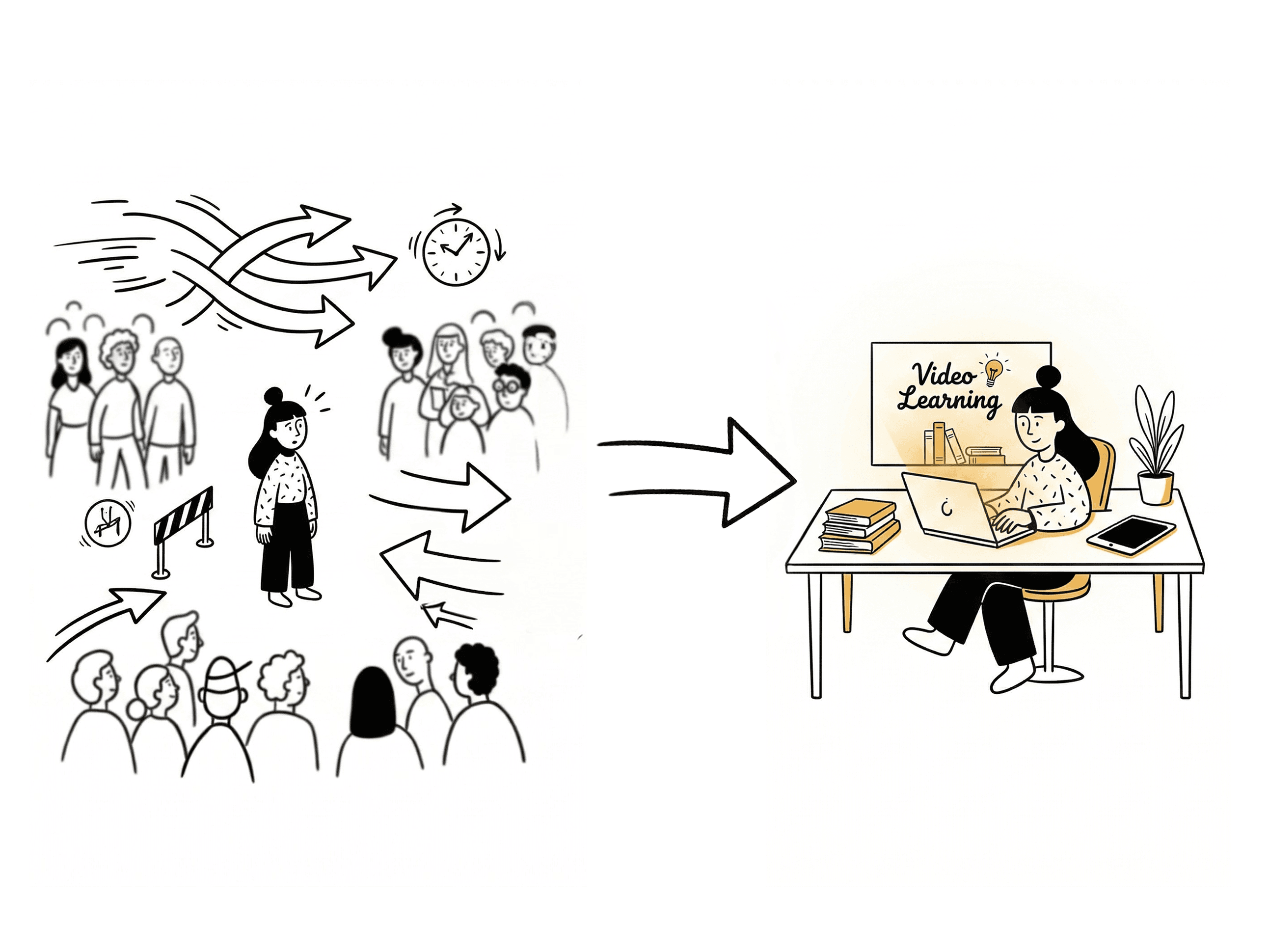
Background: The Retreat to Video as a Social Refuge
For individuals with Borderline Intellectual Functioning (BIF), the real world often moves too fast. They exist in a 'gray area,' cognitively different enough to struggle in neurotypical settings but excluded from specialized support systems reserved for diagnosed disabilities. BIF users often retreat to video-based learning (VBL) as a refuge to escape the social anxiety and pressure of face-to-face learning environments.
"There aren't many people who can wait for us."
The Learning Journey: Seven Accessibility Barriers
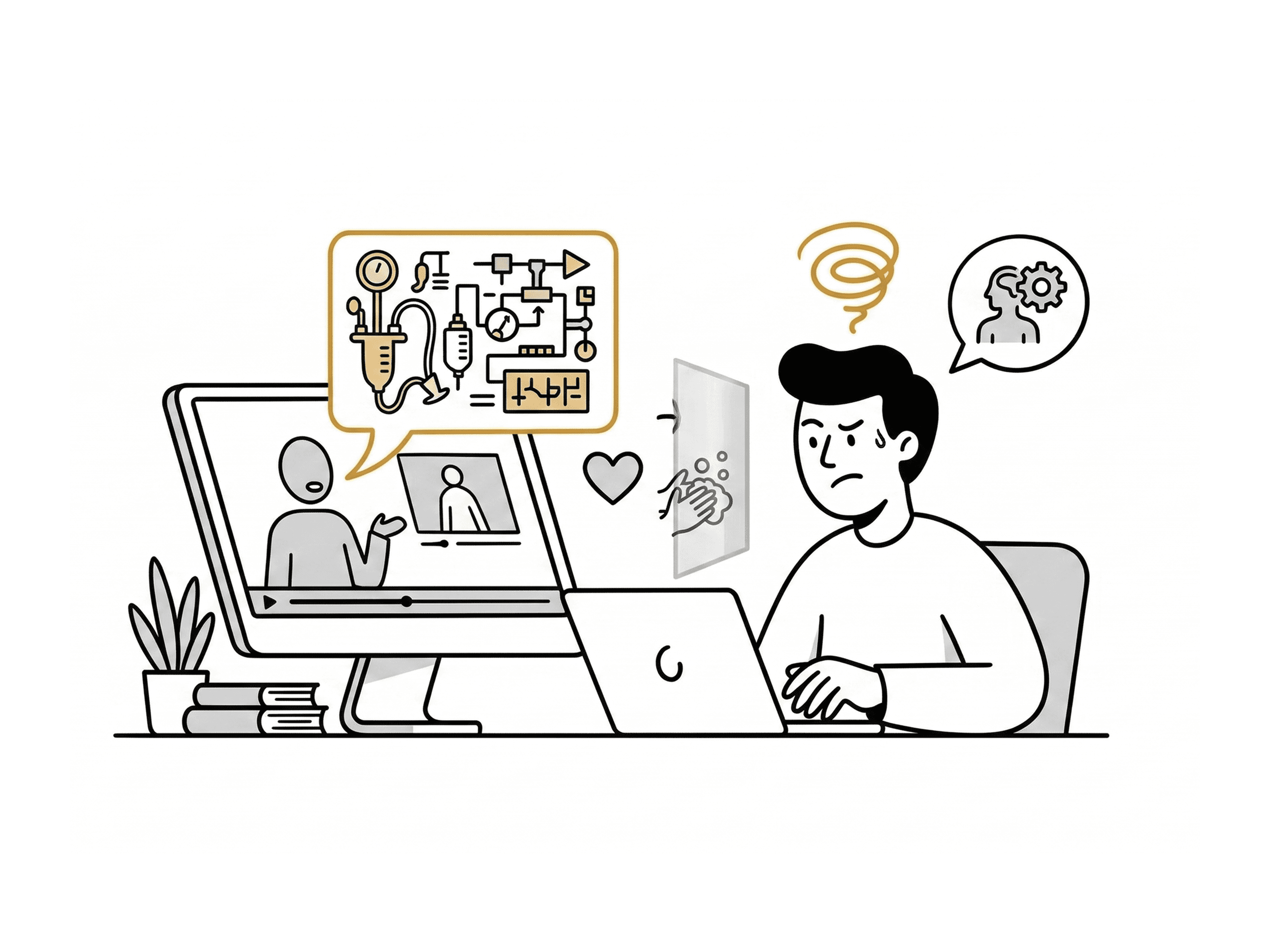
The Barrier of 'Common Sense' Language
Verbal Comprehension Misalignment
What content creators perceive as entry-level 'common sense' vocabulary often functions as technical jargon for BIF learners. This fundamental mismatch between concrete thinking patterns and abstract language creates immediate comprehension barriers.
"During safety training, there were too many unfamiliar words... medical terms... like airway intubation..."
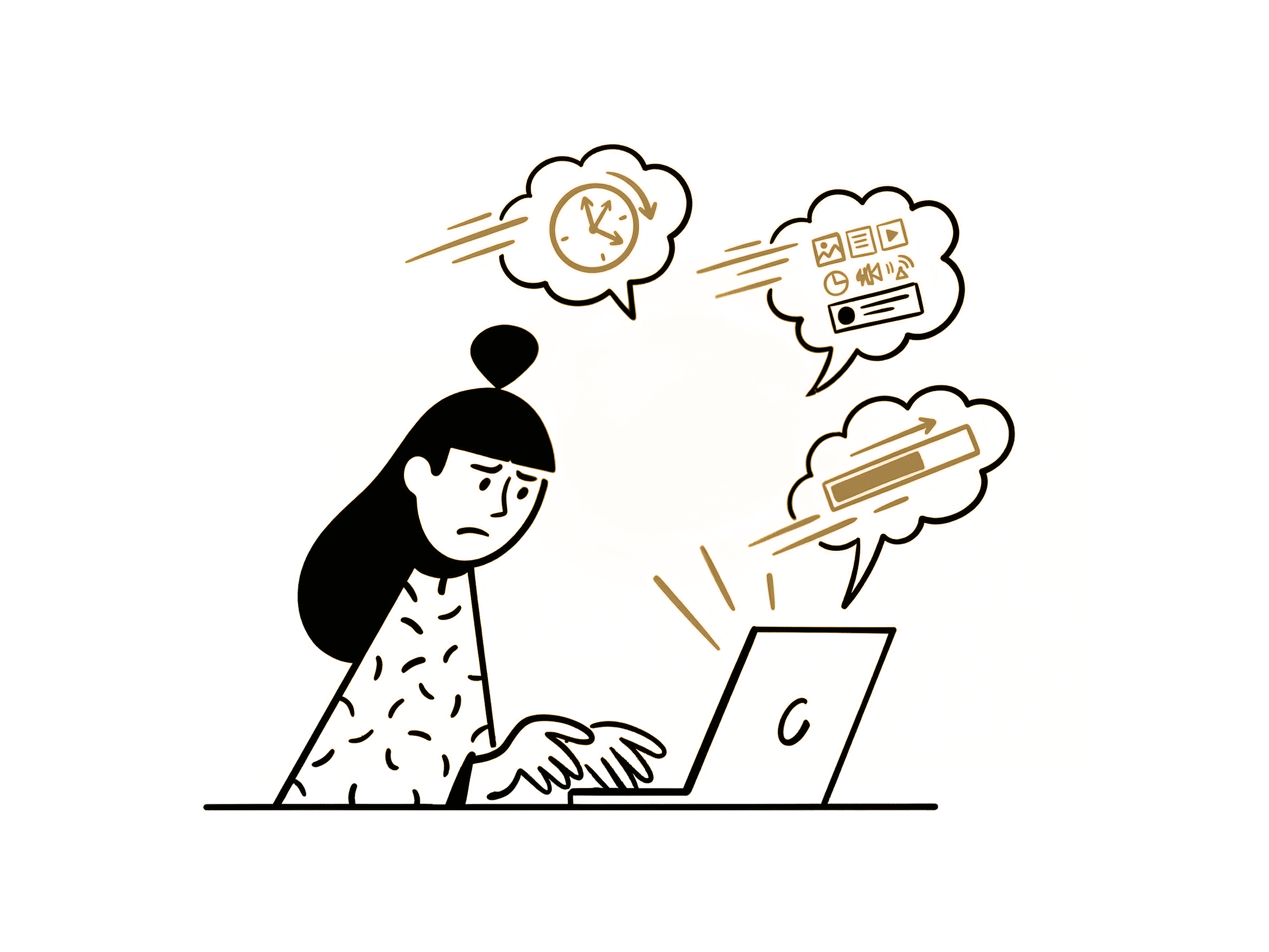
'The Video is Racing Ahead of Me'
Working Memory Constraints - Rapid Pacing & Density
Information density spikes, such as rapid turn-taking with pauses under 0.5 seconds, create severe working memory overload. BIF users struggle to process and retain content when the video pace exceeds their processing capacity.
"It is definitely a bit complicated. I don't remember, the video went by too quickly."
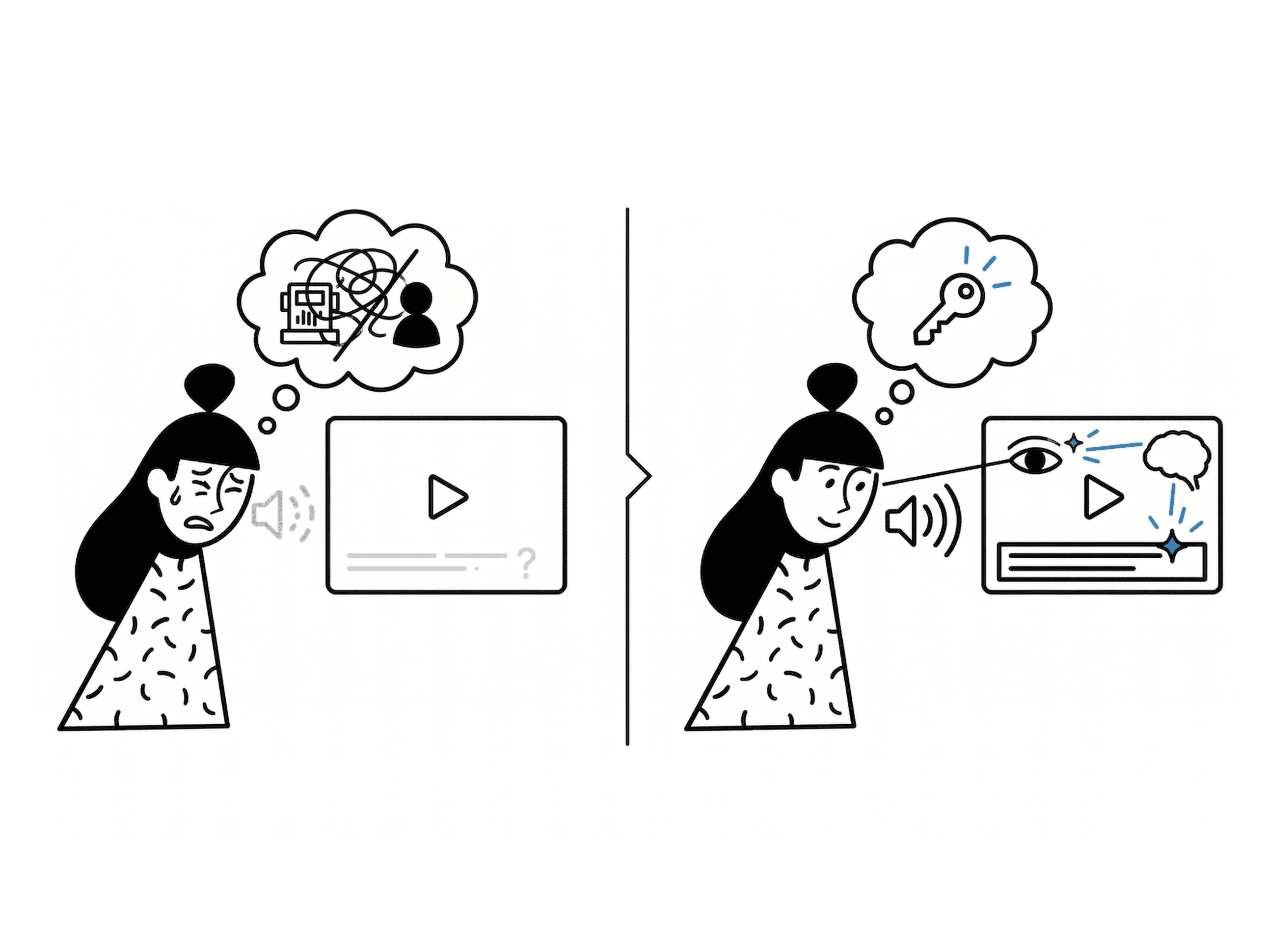
The Multi-modal Anchor
Working Memory Constraints - Single vs. Audio-Caption Delivery
Content presented through only one modality (audio-only or visual-only) often fails to be processed. However, when audio is paired with visual anchors like captions, comprehension improves dramatically as the redundant channels reduce cognitive load.
"I didn't hear it... I thought the sound from the machine was the narrator's voice. It was subtitles... I feel like I need something like a caption or a highlight to emphasize that 'this is important right now'."
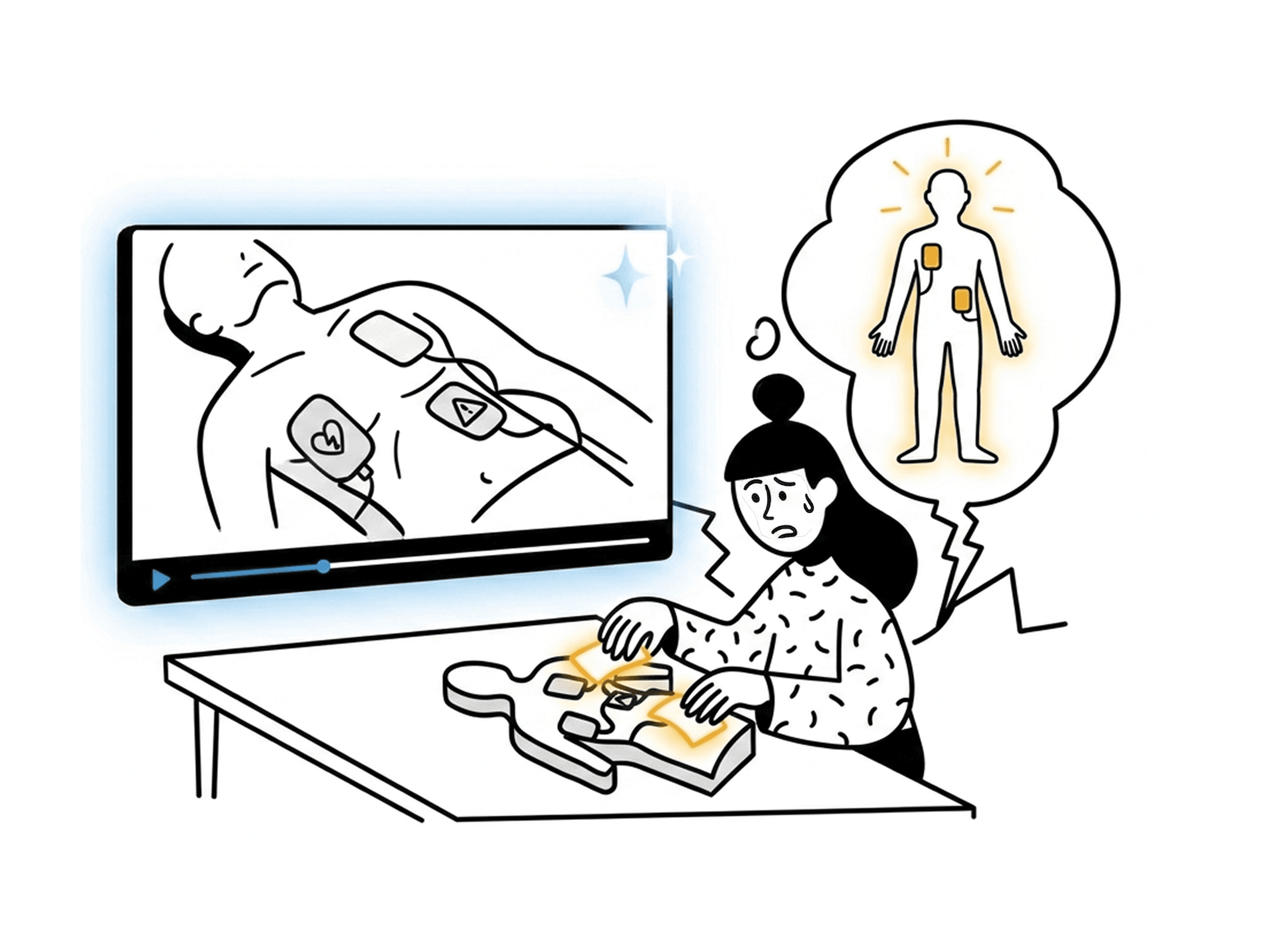
The 3D Puzzle on a 2D Screen
Spatial Perception Misalignment
BIF users often face significant challenges translating two-dimensional video demonstrations into three-dimensional physical actions. Angled camera perspectives and device rotations make spatial relationships difficult to discern clearly.
"I can understand it in my head, but when I actually try to do it myself... my body just doesn't follow along."
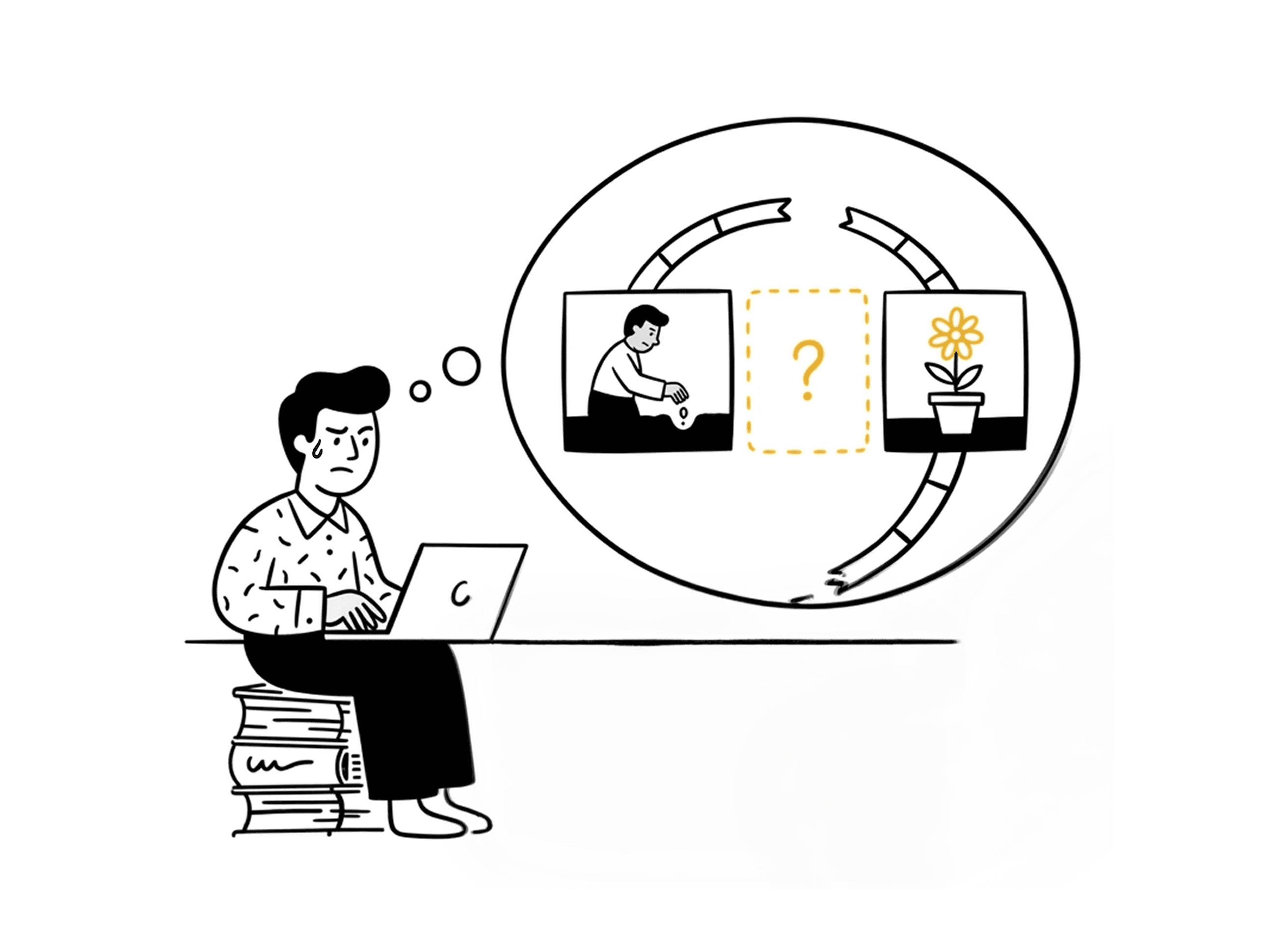
The Mystery of the Omitted Scene
Inferential Reasoning Capability Misalignment
Informational videos frequently omit intermediate steps, requiring viewers to make bridging inferences about causal relationships. For concrete thinkers, these gaps create comprehension barriers that repetition cannot overcome.
"We can't really figure out what the specific outcome is in the end... the story doesn't connect."
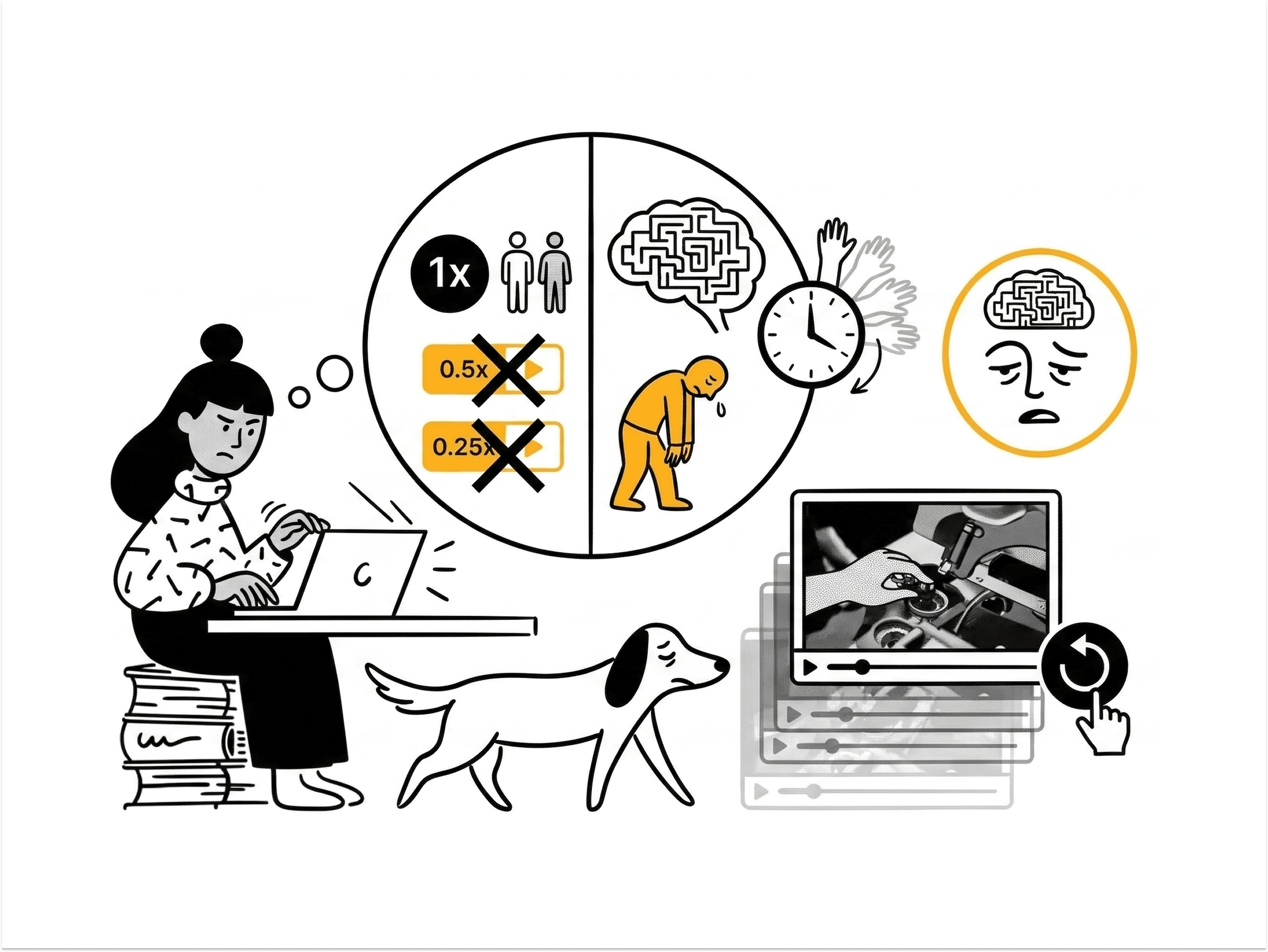
Brute-Force Replay vs. The Efficiency Paradox
Coping Strategies: Repetitive Viewing & Speed Control
Users rely on repetitive viewing as a 'brute-force' coping mechanism, which often leads to mental and physical fatigue without resolving the core barrier. Paradoxically, many avoid slowing down playback speeds to maintain a sense of normalcy and avoid the stigma of 'slowness'.
"There were many things I could not understand even after repeatedly replaying them. If you make it slower, it literally becomes slower and takes too much time, so I've never used it."
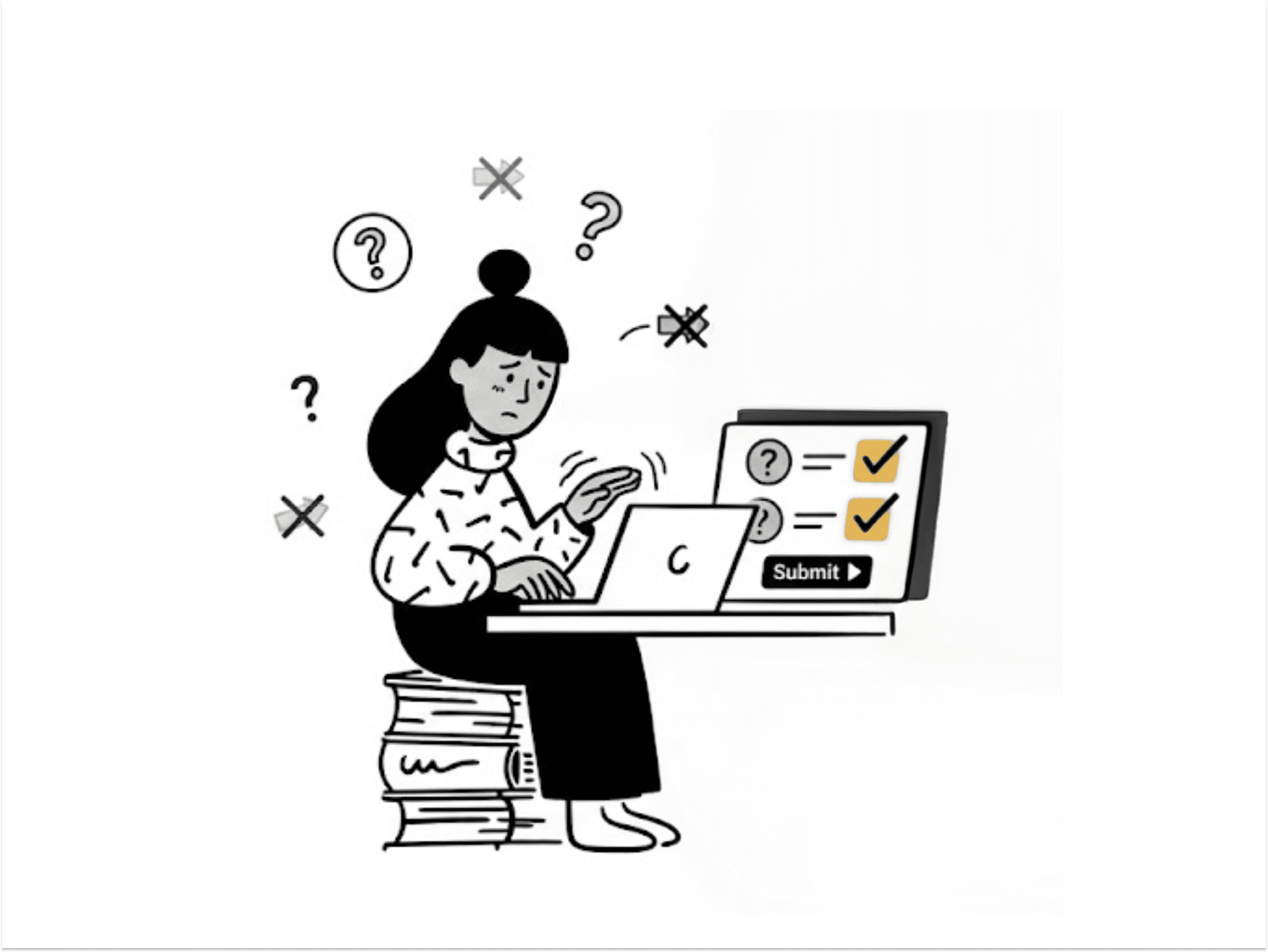
The Shadow of Self-Doubt
Negative Feedback Cycle and Internalized Inadequacy
By the end of the session, participants often provide correct answers but suffer from an internalized self-doubt that overrides objective success. For example, even after selecting the right options, a participant might rate their confidence as only 40% to 60%. This reflects years of accumulated learning gaps and continuous negative feedback that erode self-efficacy.
"While 'ordinary' people can do it at that speed, I'm quite lacking and slow in that. I lost track of it in my mind."
Design Implications
Recommendations for BIF-inclusive video learning
Cognitive Load Reduction
- ✓Use simpler language with interactive explanations
- ✓Reduce visual density for improved clarity
- ✓Balance information across multiple modalities
Scaffolding & Progressive Disclosure
- ✓Highlight important information with clear visual markers
- ✓Break down knowledge into step-by-step guidance
- ✓Support adaptive video segmentation
Fostering Self-Efficacy
- ✓Emotional scaffolding through non-evaluative check-ins
- ✓Support non-verbal querying to lower help-seeking barriers
- ✓Personalization for strength-based learning




Citation
@article{chu2026icantkeepup,
  title={"I Can't Keep Up": Accessibility Barriers in Video-Based Learning for Individuals with Borderline Intellectual Functioning},
  author={Hyehyun Chu and Seungju Kim and Chen Zhou and Yu-Kai Hung and Saelyne Yang and Hyun W. Ka and Juho Kim},
  year={2026},
  eprint={2602.08300},
  archivePrefix={arXiv},
  primaryClass={cs.HC},
  url={https://arxiv.org/abs/2602.08300},
}